I came across this course when I was idly Googling ‘Hollywood cinema modules in your area’.
‘Week 1: Classical Hollywood Style
Film: Stagecoach (John Ford, 1939)
Week 2: Genre and Hollywood Studios: Musical
Film: Singin’ in the Rain (Gene Kelly and Stanley Donen, 1952)
Week 3: Classical Hollywood Stardom
Film: Mildred Pierce (Michael Curtiz, 1945)
Week 4: Hollywood and Politics I: The New Deal and World War II
Film: Casablanca (Michael Curtiz, 1942)
Week 5: Hollywood and Politics II: The Blacklist and Cold War
Film: Invasion of the Body Snatchers (Don Siegel, 1956)
Week 6: Reading Week
Week 7: Hollywood and Ideology: Race and Ethnicity
Film: The Defiant Ones (Stanley Kramer, 1958)
Week 8: Hollywood and Ideology II: Antebellum South
Film: Dixie (A. Edward Sutherland, 1943)
Week 9: Independent and Exploitation Cinema (B films)
Film: Jailhouse Rock (Richard Thorpe, 1957)
Week 10: Auteurs and a ‘New’ Hollywood
Film: Psycho (Alfred Hitchcock, 1960)’.
It’s being taught in a university film studies department this fall (not by me, obviously), but looks like something straight out of the 1960s. Male auteurs, male directors, male content (apart from ‘Mildred Pierce’, which had a female star but was written by– you’ve guessed it– men). A few years ago, when universities were making an attempt to ‘decolonise the curriculum’, I overheard a young male colleague say to another male colleague during exam season: ‘But I teach classical Hollywood, so I don’t have to change a thing. Everything was made by men’.
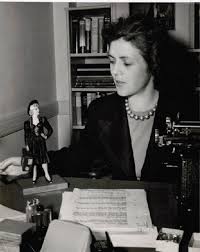
Since the 1970s, Molly Haskell and others have examined Hollywood’s images of women, and since the mid 1990s, historians such as Cari Beauchamp, Judith Mayne, Emily Carman, Erin Hill, Christina Lane, Maya Montanez Smukler and myself have highlighted the significant number of women who worked for Hollywood in front of and behind the camera — and some of them might even qualify as ‘auteurs’. Despite all the articles and books written about women in ‘classical Hollywood’ — and the occasional interest of the media — it often feels like we haven’t made a dent in the content of university film courses. Is it too much of a stretch to ask lecturers to consider someone other than the [male] director as a film’s creative ‘author’? Or to think about the importance of collaborative authorship during the studio system (A.K.A. screenwriters, film editors, producers)? Or to step outside the film text to look at the history of production and how the film business interacted with the rest of the world? Or to acknowledge the thousands of women who had an impact on all levels of the industry from the early days to the Blacklist? Here is one of those women, recently discussed in Jacobin, who none of the ‘old school’ teachers of university courses want to consider, but who (once upon a time) was loved, admired, hated and feared by just about everyone working in the American film industry…
 J. E. Smyth